TB-500 Research: Mechanism, Tissue Repair, Cardiac, and Hair Studies | MD/TB-500
TB-500 Mechanism of Action
TB-500 (Ac-LKKTETQ) binds G-actin monomers within cells, preventing premature filament polymerization. This actin-sequestering activity liberates cells from the cytoskeletal constraints that block migration, enabling directed movement into damaged tissue zones. The effect is the same core function thymosin beta-4 performs in mammalian cells at large — as the primary endogenous G-actin sequestering molecule, thymosin beta-4 holds approximately 70% of cellular G-actin in non-polymerized reserve [1].
Four downstream signaling pathways have been characterized:
ILK/PINCH/Akt pathway. TB-500 forms a functional complex with integrin-linked kinase (ILK) and PINCH, activating the Akt/PKB survival kinase. This pathway promotes cell survival under stress and is the proposed mechanism for the cardioprotective effects observed in mouse infarction models [5].
NF-kB inhibition. Thymosin beta-4 blocked TNF-alpha-induced NF-kB RelA/p65 nuclear translocation and IL-8 gene expression in human corneal epithelial cells via PINCH-1/ILK complex modulation [14]. This anti-inflammatory effect operates independently of actin-binding, establishing TB-500 as an NF-kB pathway inhibitor.
VEGF upregulation. Thymosin beta-4 modulates VEGF expression, promoting angiogenesis and vascular scaffold formation in wound tissue. This is the same pathway that raises a theoretical tumor-growth concern in subjects with pre-existing malignancy — see TB-500 side effects.
MMP-2 and MMP-9 upregulation. Matrix metalloproteinase upregulation supports extracellular matrix remodeling during tissue repair, allowing cells to migrate through the provisional wound matrix.
What does TB-500 do in research models? In summary: it enables cell migration via actin dynamics, promotes cell survival via ILK/Akt, suppresses inflammatory cytokine production via NF-kB inhibition, and stimulates angiogenesis via VEGF — four coordinated mechanisms that converge on tissue repair and inflammation resolution.
TB-500 and Thymosin Beta-4: Relationship Explained
What is the difference between TB-500 and thymosin beta-4? Thymosin beta-4 is a 43-amino-acid endogenous protein found at high concentrations in most mammalian tissues. TB-500 is a synthetic heptapeptide (seven amino acid residues, sequence Ac-LKKTETQ) corresponding to positions 17-23 of that full-length protein. The LKKTETQ sequence contains the actin-binding domain: it is the region that drives cell migration and cytoskeletal remodeling [1] [2].
The distinction matters for interpreting the research literature. The majority of mechanistic studies — including the Phase 1 human safety trials [9] [12] and the Phase 2 wound healing studies [6] [7] — used full-length thymosin beta-4, not TB-500. The fragment was studied specifically because it retains the actin-binding activity while being a simpler, more synthetically accessible molecule.
This creates an extrapolation gap. Data on the full-length protein (molecular weight: ~4.9 kDa, 43 residues) cannot be directly applied to the heptapeptide fragment (molecular weight: 801.9 Da, 7 residues) without qualification. The pharmacokinetics, biodistribution, and off-target activity profiles of the two molecules differ.
A further complication: a 2024 study found the TB-500 parent heptapeptide Ac-LKKTETQ may not itself be the direct active species in wound healing assays. The metabolite Ac-LKKTE (a five-residue truncation) drove the observed activity in vitro. This finding does not invalidate TB-500's research interest, but it introduces another layer of mechanistic complexity that any reading of the literature should acknowledge.
For visualizing the fragment-vs-parent structure, see the thymosin beta-4 and TB-500 relationship diagram.
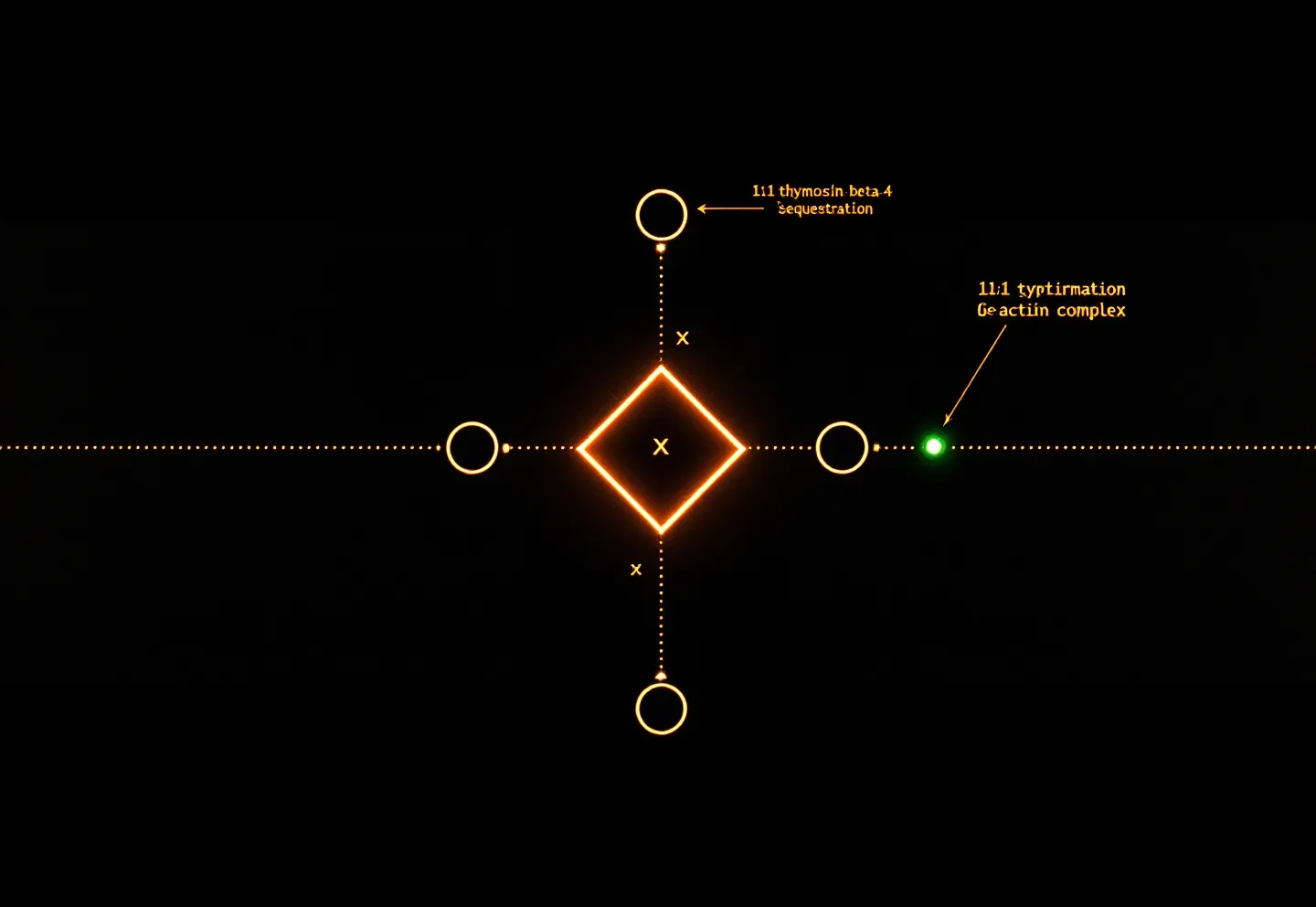
TB-500 Benefits Observed in Research Models
What are the benefits of TB-500 peptide as documented in research? The published preclinical record covers five domains:
Ligament and tendon repair. Thymosin beta-4 applied to surgically transected rat MCLs via fibrin sealant produced significantly improved mechanical properties at four weeks: uniform, evenly spaced collagen fiber bundles with larger fibril diameters and higher femur-ligament-tibia complex strength [3].
Dermal wound healing. Incisional rat wound models treated with thymosin beta-4 showed superior organized collagen fibers with red birefringence (mature connective tissue), significantly reduced myofibroblast accumulation, minimal scarring, and maintained wound breaking strength [4]. Diabetic mouse burn wound models showed improved wound closure, granulation, and vascularization with reduced RAGE expression [10]. A 2024 rat study confirmed enhanced angiogenesis from day 3, accelerated epithelialization, and reduced inflammatory infiltration throughout the healing timeline [13].
Corneal wound healing. Thymosin beta-4 significantly promotes corneal epithelial cell migration without altering proliferation rates. In scrape wound and alkali burn rabbit/mouse models, it accelerated re-epithelialization, reduced polymorphonuclear infiltration, suppressed pro-inflammatory cytokines, and inhibited TNF-alpha-stimulated NF-kB activation [16]. Phase 2 topical human trials confirmed wound-healing benefit and safety for venous and pressure ulcers [6] [7].
Post-extraction bone healing. Intraperitoneal thymosin beta-4 in rats post-molar extraction accelerated granulation and new bone formation, suppressed apoptosis and inflammatory infiltrate [11].

TB-500 Cardiac Research
Is TB-500 good for your heart? The cardiac research record is one of the more robust areas of thymosin beta-4 investigation, though the human data are for the full-length parent protein.
In mouse coronary artery ligation models, thymosin beta-4 formed a functional complex with PINCH and ILK, activated the Akt/PKB survival kinase, reduced myocardial infarct size, enhanced early cardiomyocyte survival, and improved cardiac function [5]. The mechanism identified a novel ILK-mediated cardioprotective pathway relevant to acute myocardial damage.
A 2021 scaffold delivery study demonstrated a RADA-RPR self-assembling peptide system that released sustained thymosin beta-4 to infarcted rat myocardium. The system activated epicardial-derived progenitor cells, promoted cardiovascular lineage differentiation, enhanced angiogenesis and lymphangiogenesis, and improved cardiac function at four weeks while reducing fibrotic scar [15].
Thymosin beta-4 is identified as pleiotropic for cardiac healing: it activates resident epicardial progenitor cells, modulates inflammation, and promotes cardiomyocyte survival post-infarction across mouse, rat, and porcine models [16]. Human Phase 1 pharmacokinetics support cardiac indications as a development target [9] [12].
All cardiac outcomes from animal models apply to the full-length protein. The TB-500 heptapeptide fragment has not been specifically studied in cardiac models.
TB-500 and Hair Follicle Research
Does TB-500 help with hair loss? Does TB-500 increase hair growth? Thymosin beta-4 has been shown to activate follicle stem cells and stimulate hair follicle development in murine models via specific molecular mechanisms.
In a transgenic overexpression and knockout mouse model, hair re-growth after depilation was significantly faster in overexpressors and slower in knockouts [11]. Overexpressing mice showed increased follicle clustering, higher hair shaft counts, elevated VEGF and MMP-2 expression, and activated P38/ERK/AKT signaling — multiple downstream pathways converging on the hair growth effect [11].
An earlier study confirmed that thymosin beta-4 stimulates hair follicle development by promoting follicle stem cell migration, differentiation, and protease production; the accelerated entry into the anagen (active growth) phase is the primary measurable outcome [11].
These findings are from murine models using full-length thymosin beta-4 or transgenic overexpression of the endogenous protein. No clinical trial has evaluated TB-500 (Ac-LKKTETQ) specifically for hair growth in humans. The hair follicle research represents a secondary focus of thymosin beta-4 investigation, separate from the tissue-repair primary research line.
For the TB-500 hair follicle studies figure, see the amber-CRT image above.
TB-500 vs BPC-157: Distinct Mechanisms in Preclinical Models
What is the difference between BPC-157 and TB-500? Two peptides. Two distinct molecular lineages. Two non-overlapping mechanisms.
BPC-157 (Body Protection Compound 157) is a 15-amino-acid pentadecapeptide derived from human gastric juice. Its primary mechanism involves growth hormone receptor signaling, local VEGF and EGF upregulation at injury sites, and nitric oxide pathway activation. Its research record is extensive in tendon, ligament, gut, and nervous system rodent models.
TB-500 (Ac-LKKTETQ) is a 7-amino-acid heptapeptide fragment of thymosin beta-4. Its primary mechanism operates through G-actin sequestration, ILK/PINCH/Akt signaling, and NF-kB inhibition — a cytoskeletal and growth-factor pathway entirely distinct from BPC-157's gastric-peptide receptor signaling.
The two peptides share wound-repair interest and VEGF pathway involvement, but through non-overlapping upstream mechanisms. BPC-157 acts via growth hormone receptor and NO pathway; TB-500 acts via actin dynamics and integrin-linked kinase. The combination is a subject of mechanistic research interest precisely because the pathways are complementary rather than redundant.
For the TB-500 vs BPC-157 comparison and stacking questions, see the frequently asked questions about TB-500.
TB-500 in the Context of Regenerative Medicine Research
How do TB-500 and BPC-157 compare to established regenerative medicine therapies? Compared to platelet-rich plasma (PRP) and mesenchymal stem cell approaches, TB-500 and its parent protein thymosin beta-4 have a smaller human evidence base but a well-characterized molecular mechanism. PRP has been evaluated in multiple controlled human trials for tendinopathy, osteoarthritis, and wound healing. Stem cell therapies have Phase 1-2 cardiac data.
Thymosin beta-4 holds Phase 1 safety data in humans [9] [12] and Phase 2 wound-healing data in venous ulcer patients [6] [7]. The heptapeptide TB-500 has no published human trial. The mechanistic framework is solid — actin dynamics and ILK signaling are well-characterized pathways — but the clinical translation gap is larger than it is for PRP or approved cell therapies.
The TB-500 research interest is positioned as a complementary mechanistic investigation, not a clinical replacement for established therapies.